The discovery that chimpanzees use tools for certain purposes surprised the world.

The information in this section is reproduced from Mark W. Nolting's book, Africa's Top Wildlife Countries, Revised 6th Edition. This content cannot be reproduced without authorization of the author. To purchase Mark's book, please visit: www.africa-adventure.com/dsp_products.html.

KENYA

  1. Introduction
  2. Wildlife and Wildlife Area
  3. Mount Kenya National Park
  4. Laikipia Private Reserves
  5. Samburu National Reserve
  6. Buffallo Springs National Reserve
  7. Shaba National Reserve
  8. Maralal National Reserve

KENYA

The word “safari” is Swahili for “a journey,” and Kenya is where it all began. Hemingway immortalized the safari experience, although he was a sport and trophy hunter rather than a naturalist or photographer.

Joy Adamson was among the group of expatriates, in the 1960s and 1970s, whose endeavors to conserve African wildlife captured the world’s attention. The writings of Karen Blixen, and the adaptation of her classic book Out of Africa into a motion picture starring Robert Redford and Meryl Streep, helped establish Kenya as a great safari destination in the modern era.

Visitors to Kenya can enjoy game viewing, birdwatching, hot-air ballooning, mountaineering, scuba diving, freshwater and deep-sea fishing, and numerous other activities.

Kenya is well known for the magnificent Serengeti Migration (shared with Tanzania) of more than one million wildebeest and zebra in the Masai Mara and for the colorful Masai, Samburu and other tribes that contribute so much to making this a top safari destination.

Kenya has one of the most diversely majestic landscapes on the continent. The Great Rift Valley, with the steep-walled valley floor dropping as much as 2,000-3,000 feet (610–915 m) from the surrounding countryside, is more breathtakingly dramatic here than anywhere else in Africa.

The eastern and northern regions of the country are arid. Most of the population and economic production are in the south, which is characterized by a plateau that ranges in altitude from 3,000 to 10,000 feet (915 to 3,050 m), sloping down to Lake Victoria in the west and to a coastal strip to the east.

Over half the country is Christian, although many people still retain their indigenous beliefs. There is a Muslim population concentrated along the coast. The Masai are found mainly to the south of Nairobi, the Kikuyu in the highlands around Nairobi, the Samburu in the arid north, and the Luo around Lake Victoria.

Bantu and Nilotic peoples moved into the area before Arab traders, who arrived on the Kenyan coast by the first century A.D. The Swahili language was created out of a mixture of Bantu and Arabic and became the universal trading language.

The Portuguese arrived in 1498 and took command of the coast, followed by the Omani in the 1600s and the British in the late nineteenth century. Kenya gained its independence within the British Commonwealth on December 12, 1963. Key foreign exchange-earners are tourism, coffee, tea and horticulture (flowers and vegetables exported to Europe, especially in the European winter).

WILDLIFE AND WILDLIFE AREAS

Kenya is one of the best countries on the continent for seeing large amounts of wildlife. In addition, lodge safaris, where guests are driven from park to park, are generally less expensive here than in Tanzania, Botswana or Zimbabwe. Prices are even more attractive in Kenya’s low season (April, May and November). Game viewing is still quite good in the low season due to the excellent visibility of the open plains of the Masai Mara and other reserves.

Kenya’s well-known parks can become crowded in high season. However, it is possible to get away from the crowds in some of the splendid private reserves or the less popular national parks. Many private reserves cater to a maximum of 12-24 guests in luxury accommodations and offer activities not allowed within the parks, such as night game drives and escorted walks. Ol Donyo Waus and Campi Ya Kanzi, for instance, each cover 250,000 acres (100,000 hectares) and cater to no more than 16 guests. You can also visit the major reserves at times other than during peak seasons. Booking a safari with a private vehicle and guide is a great way to maximize the quality of your game viewing experience.

The Kenya Wildlife Services, formed to monitor the national parks and reserves, has instituted changes that have reduced poaching and limited the building of new lodges and camps in parks and reserves.

The Masai Mara is the best reserve in Kenya for wildlife viewing and should, if at all possible, be included in your itinerary, unless you will be touring the Serengeti National Park in Tanzania at the times of the year when the Serengeti Migration is more concentrated there.

In general, game viewing is best during the dry seasons, mid-December-March and July-early October. Wildlife is easiest to spot in the Masai Mara, Amboseli and Nairobi National Parks, which have vast wide-open plains. Samburu/Buffalo Springs National Reserves and Lewa Downs are the country’s best northern reserves and are also excellent for game viewing.

The country is an ornithologist’s paradise, with over 1,000 species of birds recorded within its borders. Greater and lesser flamingos migrate along the Rift Valley and prefer the alkaline lakes of Magadi, Elmenteita, Nakuru, Bogoria or Turkana. Lakes Naivasha and Baringo are freshwater lakes. Birdwatching is good year-round, but is perhaps best between September and March when many species of Eurasian migratory birds are present alongside the breeding residents.

Flying safaris are available to many of the parks and reserves.Unique, camel-back safaris are operated in the north, where guests spend time riding these “ships of the desert” and walking down dry riverbeds.

MOUNT KENYA NATIONAL PARK

Kenya’s highest mountain and the second highest on the continent, Mount Kenya lies just below the equator, yet it has several permanent glaciers.

Mt. Kenya’s two highest peaks, Batian (17,058 ft./5,199 m) and Nelion (17,023 ft./5,188 m), are accessible by about 25 routes and should be attempted only by experienced rock climbers. Point Lenana (16,355 ft./4,985 m) is a non-technical climb that is accessible to hikers in good condition and is best climbed in the dry seasons. January-February is the best time to go, when views are the clearest and temperatures are warmer on top; July-October is also dry
but colder. Vegetation changes are similar to those described for the Ruwenzori Mountains (Congo) and Mt. Kilimanjaro.

Rock-climbing routes on the south side of the mountain are in bestcondition from late December to mid-March, while routes on the north side are best climbed from late June to mid-October. Ice routes are best attempted during the same periods but on opposite sides of the mountain. Howell Hut (17,023 ft./5,188 m), located on the summit of Nelion, sleeps two.

Although rarely seen, climbers should be on the lookout for buffalo and elephant. Other wildlife that may be encountered includes leopard, duiker, bushbuck, giant forest hog, Syke’s monkey and colobus monkey.

Because climbers can ascend to high altitudes very quickly, Mt. Kenya claims more than half of the world’s deaths from pulmonary edema. My climbing partner had symptoms of pulmonary edema after reaching Austrian Hut (15,715 ft./4,790 m), and we had to abandon our attempt of Batian Peak and return to lower altitudes. Therefore, a slow, sensible approach is recommended.

The world’s highest altitude scuba diving record was shattered at Two Tarn Lake (14,720 ft./4,488 m), one of more than 30 lakes on the mountain. The previous record of 12,500 feet (3,811 m) was set at Lake Titicaca in Bolivia. In addition, climbers are occasionally seen ice skating on the Curling Pond below the Lewis Glacier.

Naro Moru Route

The Naro Moru Route is a steep, quick route up the mountain. The climb to Point Lenana normally takes two or three days up and one or two down. The first night is often spent at Naro Moru Lodge or, better yet, at the Met — Meteorological Station — (10,000 ft./3,050 m) to assist altitude acclimatization.

From Nairobi, drive 105 miles (168 km) to Naro Moru, then 10 miles (16 km) on a dirt road to the park gate (7,874 ft./2,400 m). You may be able to drive to the Met Station, unless the rains have washed out the road.

From the park gate, it is a three and one-half hours (6 mi./10 km) hike through conifer, hardwood and bamboo forests to the Met Station. Beware of buffalo enroute. The Met Station has self-service bandas with mattresses, cooking facilities, long-drop toilets and water. To help you acclimatize, consider hiking for about an hour up to the tree line (10,500 ft./3,200 m) in the afternoon, returning well before dark.

From the Met Station, hike through the Vertical Bog, a series of muddy hills with patches of tussock grass. To keep your boots dry, you may want to wear tennis shoes through the bog. Cross the Naro Moru River and continue to Teleki Valley, where Mt. Kenya’s peaks finally come in clear view (if it is not cloudy). After leaving the tree line, vegetation will change to tussock grass and heather moorlands with everlasting flowers, giant groundsel and giant lobelia that sometimes exceed 30 feet (9 m) in height.

From the Met Station, it takes about six hours to reach Mackinder’s Camp (13,778 ft./4,200 m), which has a brick lodge and campsites. American Camp (14,173 ft./4,320 m), a camping spot one hour from Mackinder’s Camp, is used by some campers who bring their own tents. Water is available from a nearby stream.

Austrian Hut (15,715 ft./4,790 m) is a three- to four-hour hike from Mackinder’s Camp. Another hour is usually required to gain the additional 640 feet (195 m) in altitude needed to reach Point Lenana, only a half-mile away.

Austrian Hut is bitterly cold at night and is most often used by technical rock climbers attempting Nelion or Batian Peaks. Many climbers wishing to conquer Point Lenana begin from their camps in the Teleki Valley (Mackinder’s) long before sunrise, reaching Point Lenana shortly after sunrise and return to Teleki Valley for the night. The view from Point Lenana is the clearest and one of the most magnificent panoramas I’ve seen from any mountain — and well worth the effort!

Around the Peaks

From Mackinder’s Camp, it is a two- to three-hour hike to Two Tarn Hut (14,731 ft./4,490 m). You may stop for the night or continue for another three or four hours over two passes exceeding 15,000 feet to Kami Hut (14,564 ft./4,439 m), located on the north side of the peaks. From Kami Hut, it is a five- to six-hour hike up the north ridge of Point Lenana or directly to Austrian Hut. Return via the Naro Moru Route described above. Due to the path’s continuous gain and loss of altitude, this is a very strenuous hike — the equivalent of climbing to Point Lenana two or three times!

Chogoria Route

This is the most scenic route on the mountain. From the Chogoria Forest Station on the eastern side of Mt. Kenya, hike or drive 10 miles (16 km) to Bairunyi Clearing (8,858 ft./2,700 m) and camp. You may choose to continue for another 4 miles (6 km) (4wd vehicle required) to Meru Mt. Kenya Lodge (9,898 ft./3,017 m) and stay in its self-catering bandas.

Hike through hagenia forest to Urumandi Hut (10,050 ft./3,063 m), owned by the Mountain Club of Kenya. Room for camping is available nearby. Minto’s Hut (14,075 ft./4,290 m) is about a six-hour hike from Meru Mt. Kenya Lodge. Space for tents is available nearby. Two Campsites, situated a mile beyond Minto’s Hut, is another good place to camp.

Austrian Hut is a four-hour hike from Minto’s Hut. Some climbers descend using the Naro Moru Route. The access road to the Chogoria Forest Station is very bad, so allow plenty of time for the drive.

Sirimon Route

The Sirimon Route is a long, slow route up the mountain.

Ten miles (16 km) past Nanyuki on the Nanyuki-Timau Road, turn right on a dirt road and drive 6 miles (10 km) to the park gate. Sirimon is the least used and most strenuous of the three major routes on Mt. Kenya.

The northern side of the mountain, much drier than the western side (Naro Moru Route), has no bamboo or hagenia zone. Acacia grasslands cover much of the northern slopes, and zebra and a variety of antelope are likely to be seen.

Although the track continues up to the moorlands to about 13,000 feet (3,960 m), it is better to make your first camp around 8,000-9,000 feet (2,440-2,745 m) so you can acclimatize. There is another campsite at 10,990 feet (3,350 m), 5 miles (8 km) from the park gate. About a mile (1.5 km) farther is Judmeier Camp (operated by the Mountain Rock Hotel). Liki North Hut (13,090 ft./3,990 m) is about a four-hour hike from Judmeier. Another four-hour hike brings you to Shipton’s Cave Campsite (13,450 ft./4,100 m). Shipton’s Camp (operated by Bantu Lodge) is a little farther up the mountain. Austrian Hut is a
five-hour hike from Shipton’s Cave.

Lone climbers are not usually allowed to enter the park. Little equipment is available in Kenya, so bring whatever you need. For climbing tips and equipment checklist, see “Mt. Kilimanjaro” in the chapter on Tanzania.

Accommodation
CLASS A: * The Mount Kenya Safari Club is located on the slopes of Mt. Kenya, outside the national park near Nanyuki, about 140 (224 km) miles from Nairobi. It was partially owned by actor William Holden and became one of the most famous “country clubs” in Africa. The spacious gardens are frequented
by many species of exotic birds. Facilities include swimming pool, Irish Pub, nine-hole golf course, and very comfortable rooms, suites and luxury cottages with fireplaces (264 beds total). The Animal Orphanage contains a number of rare species, such as zebra duiker and bongo. High-altitude flights around the peaks of Mt. Kenya in a Beaver aircraft are available. Game drives are not conducted on the property.
CLASS A/B: * Mountain Lodge, about 110 miles (177 km) north of Nairobi, is a “tree hotel” set in a forest reserve near the park overlooking a water hole and salt lick, similar to Treetops and the Ark (see “Aberdare National Park”). All 42 double rooms have ensuite facilities and face the water hole.
CLASS B: * Lake Rutundu Cottages is a rustic yet comfortable fishing lodge set on a small tarn (mountain lake) at 10,200 feet (3,100 m) altitude.
Guests are accommodated in two cedar cabins with ensuite facilities and hot tub. The lodge is self-catering, but most tour companies will provide full-service catering. The trout fishing is some of the finest in the world! Best access is by charter flight to Africa’s highest airstrip, at 11,000 feet (3,355 m).
CLASS B/C, D & E: * Naro Moru River Lodge, located below the entrance to the park, has chalets (Class B/C) with ensuite facilities and rustic, self-service cabins (Class D & E). Climbers often stay here before and after their attempts at Mt. Kenya’s peaks. Trout fishing is good.
CLASS C/D: * Mountain Rock Hotel has a few simple chalets in a patch of forest near Naro Moru.
CAMPING: Camping is allowed at the Naro Moru Lodge and at sites in the park.

LAIKIPIA PRIVATE RESERVES

Laikipia, located north of the Aberdares and northwest of Mt. Kenya, is a wild and sparsely populated region considered to be the gateway to Kenya’s Northern frontier. Much of Laikipia is covered by large, privately owned ranches that cover a wide range of landscapes from high plains to low forested valleys. On most ranches, cattle share the land with free-ranging wildlife. Some are sanctuaries were created by local communities, which have combined small farms and grazing land into large group ranches — some of which are active in significant conservation programs. These community ranches are great places to learn about traditional cultures. A visit to one of these private ranches is a highly recommended as a way to get off the beaten path.

Borana Ranch, Ol Malo Ranch, Loisaba Ranch, Ol Ari Nyiro Ranch and Mugie Ranch are located in Laikipia. Although Lewa Downs, Il’Ngwesi and Tassia are technically outside Laikipia, we have included them in this section because they offer similar experiences.

The Sanctuary at Ol Lentille

The Sanctuary at Ol Lentille is a breathtaking lodge situated on a 6,500-acre conservancy, part of the Kijabe Group Ranch. The lodge is co-owned by the Maasai community, so the community benefits from this unique ecotourism venture. Carpeted in grassy hills and deep valleys and shrouded by woodlands, the conservancy hosts a wide array of wildlife, including the endangered African wild dog, greater kudu, leopard, both the spotted and striped hyena, and klipspringer. The landscape is studded with acacia, African olive and fig trees.

Accommodation
CLASS A: *The Sanctuary at Ol Lentille boasts four luxurious, fully staffed country houses, all with courtyards, decks, gardens and lawns. The houses have all the comforts of home, including stereo systems, high-pressure showers, study areas and wireless Internet access. For those seeking additional pampering and comfort, there are swimming pools, a spa and massage facilities, common lounge and dining areas, and a game-viewing deck.
> Read more about The Sanctuary at Ol Lentille and its unique conservation approach.

Sabuk

This wilderness area, located in Northern Laikipia, has plains, valleys, acacia forest and wild olive forest. Kudu, zebra, eland, elephant, giraffe, gazelle, and, of course, the predators, leopard, lion and cheetah are found here.

Accommodation
CLASS A: * Sabuk Lodge has five beautiful stone -and-thatch cottages with ensuite bathrooms and private verandahs overlooking the Ewaso Nyiro River Gorge below. Day and night game drives, escorted walks, and walking/camel safaris as well as fly camping with Lailipiak Maasai warriors as your guides are available.

Loisaba Ranch

Loisaba is a 65,000-acre (26,000-hectare) ranch located on the northern edge of the Laikipia Plateau. Day and night game drives, escorted walks, fly-camping, horseback riding and helicopter rides are offered.

Accommodation
CLASS A: * Loisaba Lodge, perched on the edge of a cliff overlooking Mt. Kenya in the distance, has seven chalets with private verandas and ensuite facilities, a swimming pool and tennis court.

Borana Ranch

Borana is a 35,000-acre (14,000-hectare) ranch located in the Laikipia area about 6,500 feet (2,000 m) above sea level. Elephant, lion, buffalo, greater kudu and klipspringer and a variety of antelope may be seen. The activities are day and night game drives, escorted walks, horseback riding and camel riding.

Accommodation
CLASS A: * Borana Lodge is set on the edge of the escarpment and has six luxury chalets with ensuite facilities and a swimming pool.

Ol Ari Nyiro Ranch

The ranch is a rhino sanctuary, and Mukutan Retreat is owned by Kuki Gallmann, author of I Dreamed of Africa (Penguin Books). The lodge is built on the edge of a gorge on the top of the Rift Valley wall, and it overlooks Lakes Baringo and Bogoria. The bush is quite thick, which makes game viewing a bit difficult. The real attraction is spending time with Kuki herself; however, she does not guarantee that she will be at the lodge. Only one group of guests is accommodated at a time.

Accommodation
CLASS A: * Mukutan Retreat has three stone and thatch cottages with ensuite facilities.

Mugie Ranch

Mugie Ranch is situated on the northern end of the Laikipia Plateau at 6,000 feet (1,830m) above sea level.

Accommodation
CLASS A: * Mutamaiyu has four luxury cottages with ensuite facilities, and it offers day and night game drives, guided walks, camel and donkey treks, cultural visits, horseback riding and clay pigeon shooting.

Lewa Downs

Located between Mt. Kenya and Samburu National Reserve, the privately owned, scenic 45,000-acre (18,000-hectare) Lewa Wildlife Conservancy has a variety of wildlife, adapted to the semi-arid environment, including a large black and white rhino population (Lewa is a rhino sanctuary), elephant, lion, leopard, cheetah, reticulated giraffe, Grevy’s zebra, buffalo, hartebeest, bushbuck, gerenuk, Gunther’s dikdik and Somali ostrich. Lewa is one of the few places in Kenya where the rare, semi-aquatic sitatunga antelope and African wild dog are sometimes seen, and we were fortunate to have seen sitatunga on our last visit!

During a previous visit we spotted Beisa oryx, Grant’s gazelle, a large herd of elephant and a few smaller herds, Mt. Kenya hartebeest and Somali ostrich, among other species. Horseback riding, hiking, camel riding, day and night game drives in open 4wd vehicles and a cultural visit to the nearby Il N’gwesi Masai tribal community are offered. The Lewa Wildlife Conservancy is a unique experiment in wildlife conservation and community development and is a not-for-profit organization.

Accommodation
CLASS A: * Wilderness Trails accommodates up to 16 guests in luxury cottages with ensuite facilities and a swimming pool. * Ngarie Niti is a large two-bedroom stone house with two separate cottages with ensuite facilities.
CLASS A/B: * Lewa Safari Camp has 12 tents, set on elevated platforms with ensuite facilities, and a swimming pool. Day and night game drives, walks, horseback and camel riding are offered. A cultural visit to the nearby Il N’gwesi Masai tribal community is a highly recommended option.

Il’ngwesi

The Il’ngwesi Conservation Area is adjacent to Lewa Downs. Wildlife includes a variety of species that have adapted to dry conditions, including oryx, reticulated giraffe, Grevy’s zebra, gerenuk and dikdik.

Accommodation
CLASS B: * Il’ngwesi has six bandas with ensuite bathrooms and a swimming pool. The lodge has a covered viewing platform and offers cultural visits and camel safaris.

Tassia

Tassia is owned and managed by the Lekurruki Community Conservation Group Ranch. Walks, Masai cultural visits and game drives are the main activities.

Accommodation
CLASS B: * Tassia Lodge has six rooms with ensuite bathrooms, and a plunge pool. The lodge is booked on an exclusive-use basis.

SAMBURU NATIONAL RESERVE

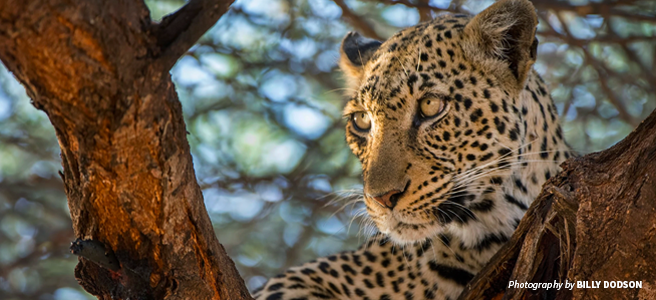
This relatively small (64 sq. mi./165 km2) but excellent reserve of scrub desert, thornbush, riverine forest, and swamps along the Ewaso Ngiro River is situated north of Mt. Kenya and the Laikipia region. Elephant and lion are plentiful, as are Beisa oryx, reticulated giraffe, gerenuk, Grevy’s zebra and other species adapted to an arid environment. Leopard are often seen. Birdlife is strikingly colorful and abundant, with golden-breasted starling, white-headed mousebird, sulphur-breasted bushshrike and a variety of weaver birds. Larger birds include the blue-necked Somali ostrich, martial eagle, Egyptian vulture and vulturine guineafowl. Samburu, probably the best-known reserve in northern Kenya, is located about 220 miles (355 km) north of Nairobi. Under special arrangement, walking may be offered just outside the reserve.

Accommodation
CLASS A: * Samburu Intrepids Camp has a swimming pool and 25 luxury tents, each with a private terrace and facilities ensuite. * Larsen’s Tented Camp, situated on the banks of the Ewaso Ngiro River, has 13 double and four huge suite tents, all with facilities ensuite (34 beds total).
CLASS B: * Samburu Lodge, located on the banks of the Ewaso Ngiro River, has rooms, cottages and tents (75 units) with private facilities and a swimming pool. This lodge also baits for crocs and leopard.
CAMPING: Campsites are located along the north bank of the Ewaso Ngiro River between the West Gate and Samburu Lodge. Public sites have long-drop toilets.

BUFFALO SPRINGS NATIONAL RESERVE

Buffalo Springs is a 50-square-mile (131-km2) reserve located south of the Ewaso Ngiro River, which serves as its northern border with Samburu National Reserve. The unusual doum palm, the only palm tree species whose trunk divides into branches, grows to over 60 feet (19 m) in height in this arid park. Wildlife is similar to what is seen in Samburu National Reserve. On a two-hour game drive, we encountered oryx, gerenuk, Grant’s gazelle, waterbuck, Somali ostrich and two large herds of elephant. Baboon are often found drinking at the springs.

Accommodation
CLASS A/B: * Samburu Serena Lodge, situated on the banks of the Ewaso Ngiro River, has 52 rooms with facilities ensuite and a swimming pool. The lodge baits for crocs and leopard.
CAMPING: Campsites have no facilities.

SHABA NATIONAL RESERVE

The turnoff to the entrance to Shaba National Reserve is located east of Samburu National Reserve, 2 miles (3 km) south of Archer’s Post. The Ewaso Ngiro River forms the reserve’s northwestern border and flows through the western part of the reserve. This 92-square-mile (239-km2) reserve is characterized by rocky hills and scattered thornbush. Volcanic rock is present in many areas. Mt. Shaba, a 5,320-foot- (1,622-m) high volcanic cone, which the park was named after, lies to the south of the reserve. Shaba has recently become famous for hosting the 2001 “Survivor” television series.

A marsh in the center of the reserve is a good spot to look for wildlife. During a short visit to this rugged, rocky park, we spotted oryx, gerenuk, common waterbuck, Grant’s gazelle, dikdik and ostrich. Wildlife is less abundant and cannot be approached as closely as in the Samburu and Buffalo Springs National Reserves. However, there is much less traffic in this reserve.

Accommodation
CLASS A/B: * Shaba Sarova Lodge, situated on the Ewaso Ngiro River, is a resort-style lodge with 85 rooms with facilities ensuite, and a huge swimming pool.
CAMPING: Ask at the gate.

MARALAL NATIONAL SANCTUARY

Maralal National Sanctuary, located northwest of Samburu and 95 miles (153 km) north of Nyahururu (205 mi./330 km from Nairobi) near the town of Maralal, has zebra, buffalo, eland, impala and hyena. Leopard are baited and are seen just before sunset from a blind near the Maralal Safari Lodge. We were fortunate to see two of these fascinating creatures during our visit.

Accommodation
CLASS C: * Maralal Safari Lodge has 12 cottages with fireplaces and ensuite facilities, a swimming pool and a waterhole.
CLASS F & CAMPING: * Yare Safaris Hostel and Campsite, located 2 miles (3 km) south of Maralal, has bandas, dormitories and campsites.


Return to the main Safari Planner section