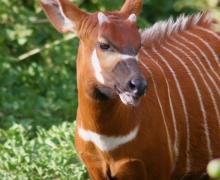
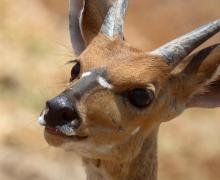
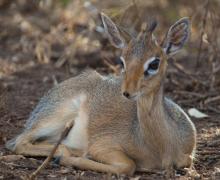
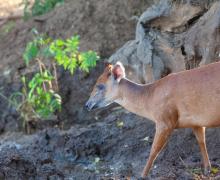
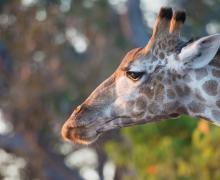
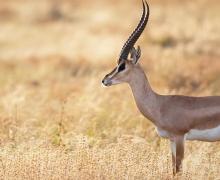
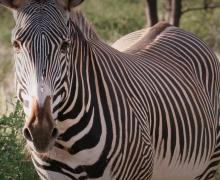
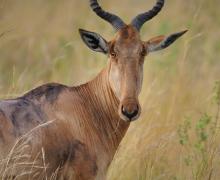
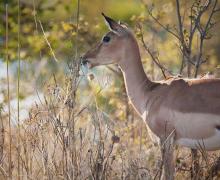
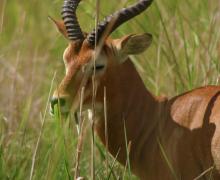
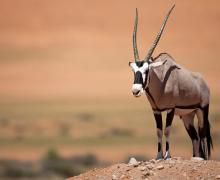
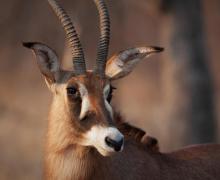
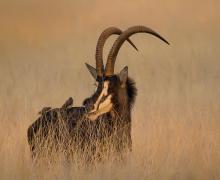
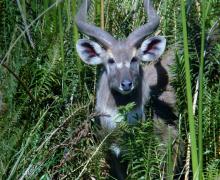
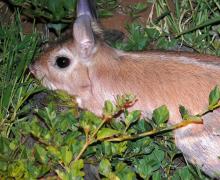
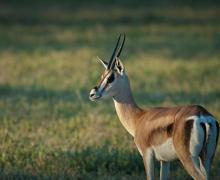
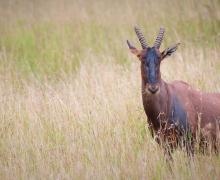
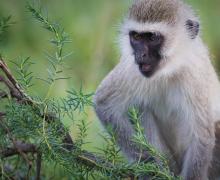
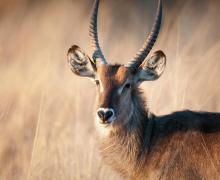
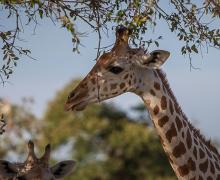
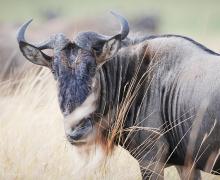
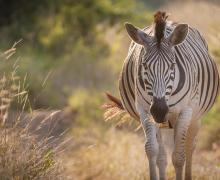
The topi is among the most socially advanced of the ungulates. Its distribution is scattered and populations isolated, probably because of habitat loss and hunting.

AWF Image Gallery
AWF Solutions
Heartland
Wildlife

Page 1 of 12     »
296 results found. Page displays 25 at a time.
Media
Details
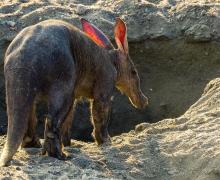
Aardvark. Photo by Malcom Boulton.
November 29, 2006
Aardvarks are nocturnal, usually waiting until dark before they emerge from their burrows. Their night-time travels average one to three miles but can range up to 18 miles a night.
October 30, 2006
Related Wildlife: Aardvark
The African fish eagle has a white head, neck, chest, shoulder and tail reminiscent of the American bald eagle. It is the African equivalent of the bald eagle, filling the same ecological niche.
October 30, 2006
AWF Solutions: Aerial Wildlife Surveys, Creating a Community Conservation Area in Mozambique, Huntington Community Nature Reserve
Heartlands: Limpopo
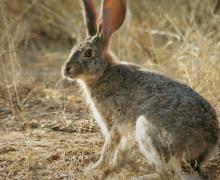
The African hare is nocturnal, and spends most of the day lying in a “form” — a depression in the ground or under bushes. Hares do not dig burrows like rabbits do.
October 30, 2006
Related Wildlife: African Hare
September 22, 2006
AWF Trustees. 2006.
December 7, 2006
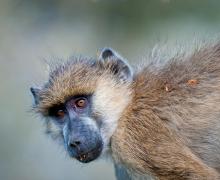
Baboon. Photo by Heather Coulter Larson.
November 29, 2006
Related Wildlife: Baboon
With tourism and human populations encroaching on their territory, baboons have been know to kidnap crying human infants confusing them as their own young.
October 30, 2006
Related Wildlife: Baboon
A chubby baobab is an iconic feature in the landscape of Banhine National Park in Mozambique. Photo by Mauro Pinto.
September 12, 2007
AWF Solutions: Strengthening Banhine National Park
Heartlands: Limpopo
Banhine National Park's wetlands are extensive, and are a key source of water in the arid lands surrounding the park. Photo by Mauro Pinto.
September 12, 2007
AWF Solutions: Strengthening Banhine National Park
Heartlands: Limpopo
AWF built a conservation research camp in Banhine National Park that caters to the international scientific community. Photo by Mauro Pinto.
September 12, 2007
AWF Solutions: Rebuilding Wildlife Populations in Mozambique, Strengthening Banhine National Park
Heartlands: Limpopo
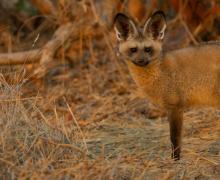
Bat-eared foxes are mostly nocturnal, emerging from their underground dens at dusk to feed on insects during the night. Photo by Craig R. Sholley.
May 3, 2007
Related Wildlife: Bat-Eared Fox
The bat-eared fox's name comes from its enormous ears, which are large in proportion to its head like those of many bats.
October 30, 2006
Related Wildlife: Bat-Eared Fox
Bat-eared foxes live in groups of mating pairs and their young. Family groups social-groom often, play and sleep together. Photo by James Weis/eyesonafrica.net
January 26, 2004
Related Wildlife: Bat-Eared Fox
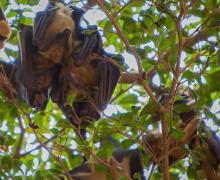
Egyptian Fruitbats. Photo by Craig R. Sholley.
November 29, 2006
Related Wildlife: Bat
After rodents, bats are the most numerous mammals on earth. With approximately 950 species, bats are the only mammals that possess real wings and can truly fly.
October 30, 2006
Related Wildlife: Bat
AWF works with Maasai womens' groups to develop enterprises like cultural villages. Here, a sample of beautiful bead work by Maasai women is sold for income.
October 27, 2006
AWF Solutions: Empowering Maasai Women
Heartlands: Maasai Steppe
Just as the name reveals, bee-eaters predominantly eat insects, especially bees, wasps and hornets, which are caught in the air.
October 27, 2006
Heartlands: Zambezi
September 22, 2006
September 22, 2006
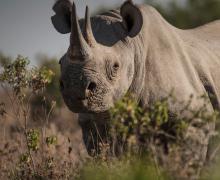
Black Rhino. Photo by Daryl & Sharna Balfour
November 29, 2006
Related Wildlife: Rhinoceros
A black rhino and her calf. Photo by Art Wolfe
November 15, 2006
Related Wildlife: Rhinoceros
AWF Solutions: Supporting Rhino Sanctuaries
Heartlands: Kilimanjaro
AWF's goal: Help the rhinoceros recover from near extinction by protecting it from poachers.
October 30, 2006
Related Wildlife: Rhinoceros
A black rhinoceros mother and her calf enjoy protection living in Ngulia Rhino Sanctuary near Tsavo East National Park in Kenya. Photo © AWF.
July 23, 2007
Related Wildlife: Rhinoceros
AWF Solutions: Giving Rhinos a Safe Home
Heartlands: Kilimanjaro
AWF is working with sanctuaries and protected areas to ensure the survival of the endangered black rhinoceros.
October 27, 2006
Related Wildlife: Rhinoceros
AWF Solutions: Giving Rhinos a Safe Home, Supporting Rhino Sanctuaries
Heartlands: Kazungula, Zambezi
Page 1 of 12     »