My first field visit after the war
Hi, everybody! I am Wellard Makambo. Makambo means “issues or words” in my mother tongue. Fortunately I don’t have many issues in my life at the moment. I am proud to be the IGCP Enterprise Officer for our Democratic Republic of Congo (DRC) Programme. I am in charge of developing alternatives for communities bordering Virunga National Park. These alternatives take the form of economic activities that generate income for local communities, thus improving their livelihoods. Which in turn will help us to conserve the mighty mountain gorilla. Today I want to share with you my visit to DRC communities after the political upheaval that engulfed the region.
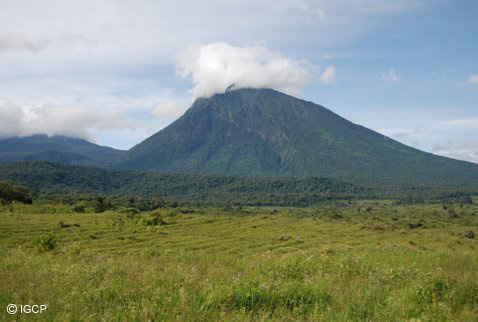
The eastern DRC near Virunga National Park went through some rough times due to the recent war. Consequently, field visits have been very limited. I am happy that I can now travel again in this region, which is slowly building its own peace. The early morning in Goma (the region’s main town) was colder than usual, but still as dusty as ever… my driver Jerome was making a final check up to ensure that everything was perfect. This was, after all, my first visit after the fighting. We did not know what to expect, yet were excited. In eastern DRC, you should always expect the unexpected. One thing we made sure to pack was water: this region suffers from a severe lack of drinking water, and getting even a single bottle of it is a luxury, let alone having it with an actual meal. I was accompanied by a few people, including Papa Mutiri, the Chairman of the local beekeepers.
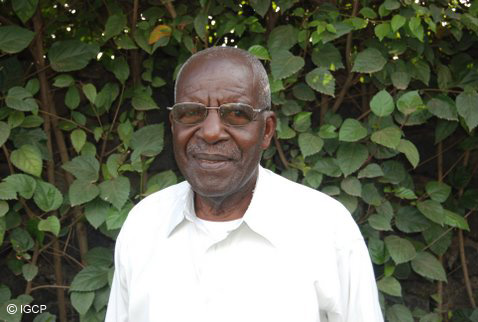 Papa Mutiri, Chairman of the local beekeepers.
IGCP supports beekeeping as an important project, since conducting this activity in the National Park is a serious threat to its biodiversity and health. Yes, I admire this man. He is 81 years old but as fit as ever, and always on time no matter what! Amazing! (Embarrassing to some that an old man can be that punctual…). We were also joined by the Community Conservation Warden from ICCN (the Park authority of Congo), a building contractor and other partners. The drive had to start early since we had quite a number of projects to visit and people to meet. By 6:30 am we rumbled out of Goma, passing by the crumbling, but still operational, international airport. A few minutes later our Land Cruiser hit the dusty, bumpy road pointed towards Kibumba village, the location of the honey processing plant. During the war it had been looted, and was currently almost a ghost house, as we had only managed to move a few of the processing machines to Goma before it was ransacked. The building had even been taken over by other enterprising citizens in name of the Local Chief. Windows were shattered, part of the fence wall was brought down, water tanks destroyed, doors broken – one could question whether we were making progress or going backwards.
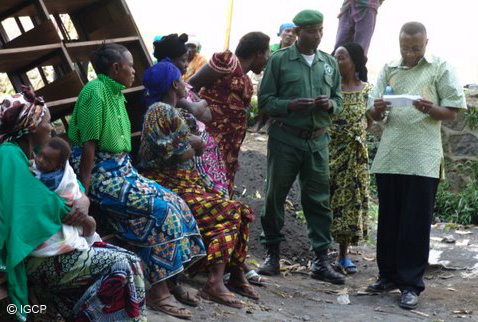 Meeting at the Park headquarters in Rumangabo (Wellard is on the right).
While the contractor was assessing the damages, I kept wondering how we should repair the house and re-start operations. I looked at a very thoughtful Papa Mutiri, who turned towards us and said: “let us always pray for peace, peace is very important for our development”. I couldn’t put it any better than that. Outside the gate, beekeepers were waiting for us. What a reunion after difficult times! Hearing the famous word used to refer to me, “chef”, which simply means chief or leader, was music to my ears. Hugging and handshakes ensued, followed by storytelling on how the keepers fled or hid during the conflict. It was a sad and emotional moment, but everyone was optimistic about the rebuilding of lives and the restarting of our activities. After Kibumba, we stopped in Rugari village to see a beekeeping project near the National Park in a remote area. We had to leave the car and walk about two kilometres into the forest. This very same place was surrounded by a rebel army about a year ago. We put on our usual honey-harvesting netted hats to protect us from any angry bees (trust me you need them!), and found, fortunately, that everything was intact.
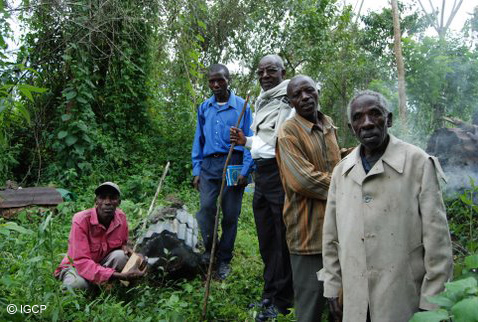 The Rugari beekeepers with one of their hives.
I will end today on that note -- an encouraging starting point for rebuilding the project -- and check in again soon to let you know how our other work in the eastern DRC has fared.